How an owl turns its head almost all the way round
An owl can turn its head about 270 degrees without getting dizzy or cutting off its blood. Here is the trick hidden in its neck.
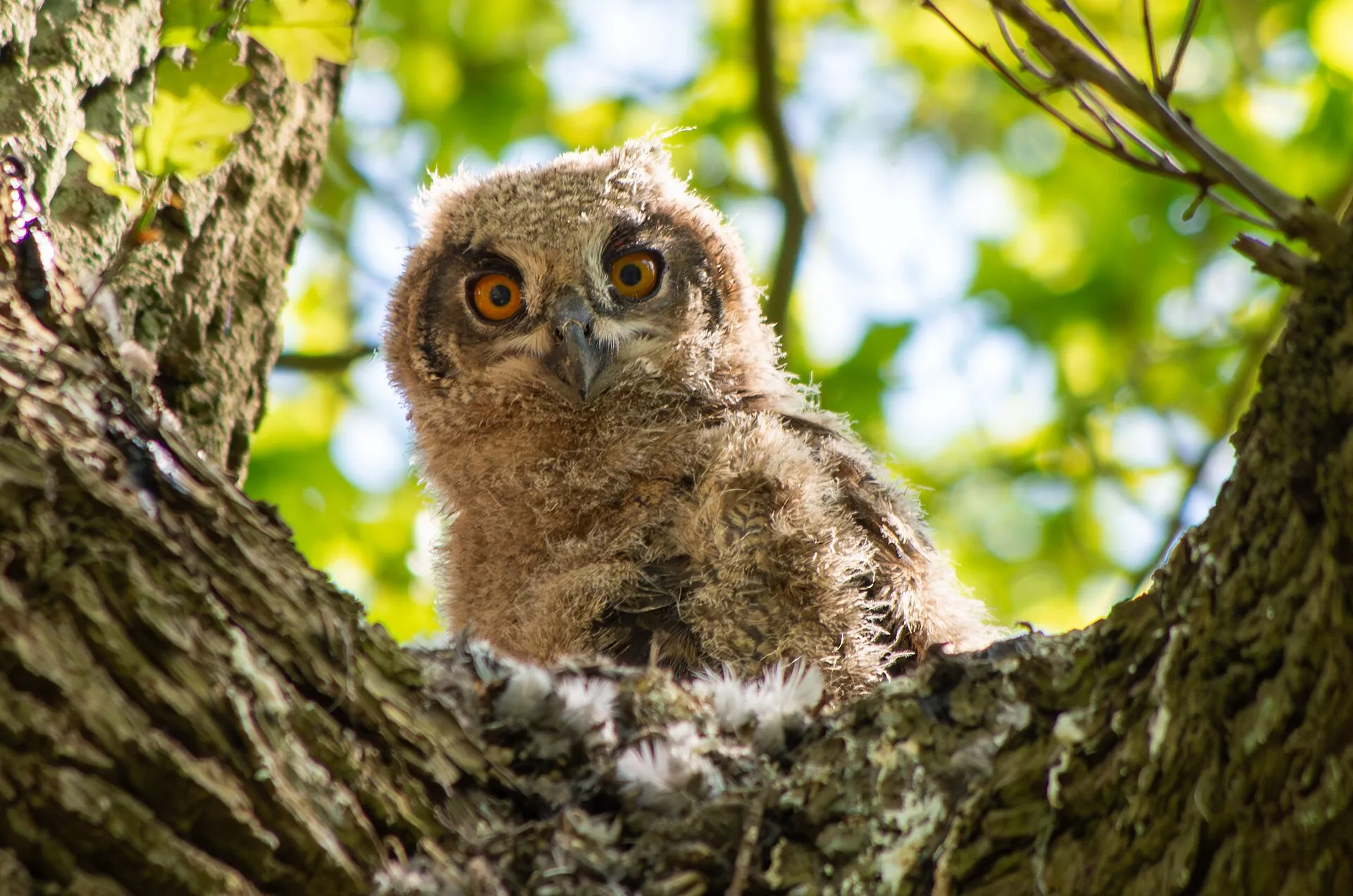
If you have ever seen an owl look backwards without moving its body, it is not a video trick. An owl can turn its head about 270 degrees: three quarters of a full circle. We manage about 90 to each side, on a good day.
Why it needs to
An owl’s eyes are huge and shaped like tubes, not balls. That gives them extraordinary night vision, but there is a price: they cannot move their eyes inside their heads. Where we glance sideways, an owl has to turn its whole head.
The neck trick
- Twice the vertebrae. Owls have 14 vertebrae in their necks; people have 7. More pieces means the turn is shared across many joints.
- Blood that keeps flowing. Turning that far would twist the blood vessels in the neck. Owls have arteries that pass through wider-than-usual openings in the vertebrae, and small reservoirs where blood pools while the head is turned, so the brain never runs short.
- Back-up connections. There are extra links between the arteries: if one gets squeezed by the turn, blood arrives through another.
A hunter’s hearing
Turning its head also helps an owl hear. In many species, especially the barn owl, one ear sits slightly higher than the other. A mouse’s rustle reaches each ear with a tiny difference in time and loudness, and the owl moves its head until that difference tells it exactly where the prey is. Some barn owls can hunt in complete darkness by ear alone.
And it flies without a sound
Owl feathers have edges like a very fine comb and a surface as soft as velvet. They break the air into tiny swirls that make almost no noise. The mouse never hears it coming.
Next time you see an owl looking over its shoulder, you will know that behind the gesture there is a neck with twice the pieces, twist-proof arteries and ears that work as a team with the eyes.